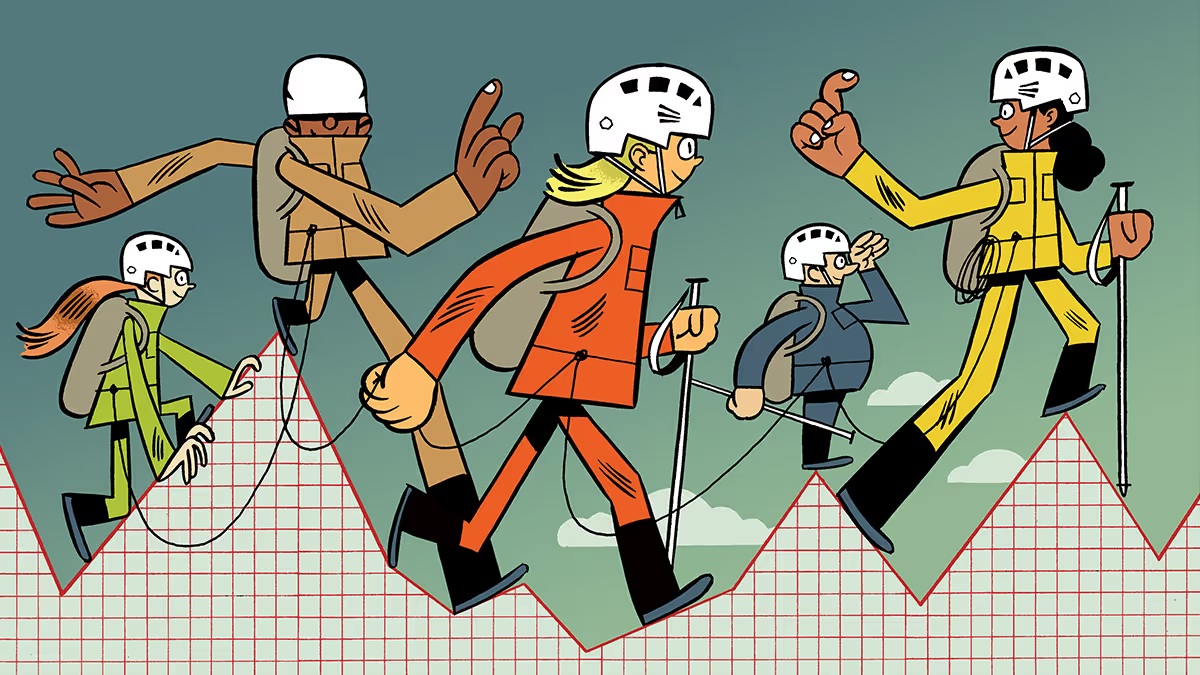
Harvard Business Review just published a piece worth noting. Researchers Susan MacKenty Brady, Stuart D. Kliman, and Leslie C. Smith identified four patterns that quietly erode trust and collaboration on teams: certainty (assuming you already have the right answer), inconsistency between words and actions, emotional reactivity, and self-justification.
Their argument is one I believe deeply: difference is the raw material for creating value on a team. But it only works when leaders can navigate the friction that comes with it. When we fall into these four traps, we shut down the very thing that makes diverse perspectives powerful.
What stood out to me from the research:
The traps are invisible to the person caught in them.
That is what makes them so dangerous. A leader who is certain they are right does not experience themselves as closed off. They experience themselves as clear. The gap between intent and impact is where trust quietly disappears.
The antidote is practice, not just awareness.
The authors offer six concrete actions: cultivate self-awareness, return to respect during conflict, communicate with candor, seek the full story before drawing conclusions, foster shared ownership, and reinforce these behaviours through consistent action. What I appreciate is that none of these are abstract ideals. They are daily choices.
This maps directly to what we see in our work at SkillsCamp. The most capable teams are the ones whose leaders have learned to hold the tension long enough for something useful to come out of it.
Read the full HBR article