Hey, it's Dr. Bailey
You just had a big planning meeting. Everyone nodded, the energy was good, and you walked out thinking "we are finally on the same page"? Then, two weeks later, your team leads have each taken the work in a completely different direction, and nobody can explain why. That gap between perceived agreement and actual agreement is one of the most expensive problems in leadership.
When was the last time you actively invited your team to disagree with you? Hit reply and tell me what happened. I read every one. |
- What's Coming Up at SkillsCamp
- Why CleanTok Has Your Brain in a Chokehold
- My Leadership Team Can't Get on the Same Page
- The False Alignment Trap
|
|
|
|
What's Coming Up at SkillsCamp |
ONGOING: OpenStudio by SkillsCamp Events for people leaders who want practical tools and space to think with peers. Each session takes a timely leadership challenge and works through it with real-world examples and strategies you can use right away. Check it out. |
|
|
|
Why CleanTok Has Your Brain in a Chokehold |
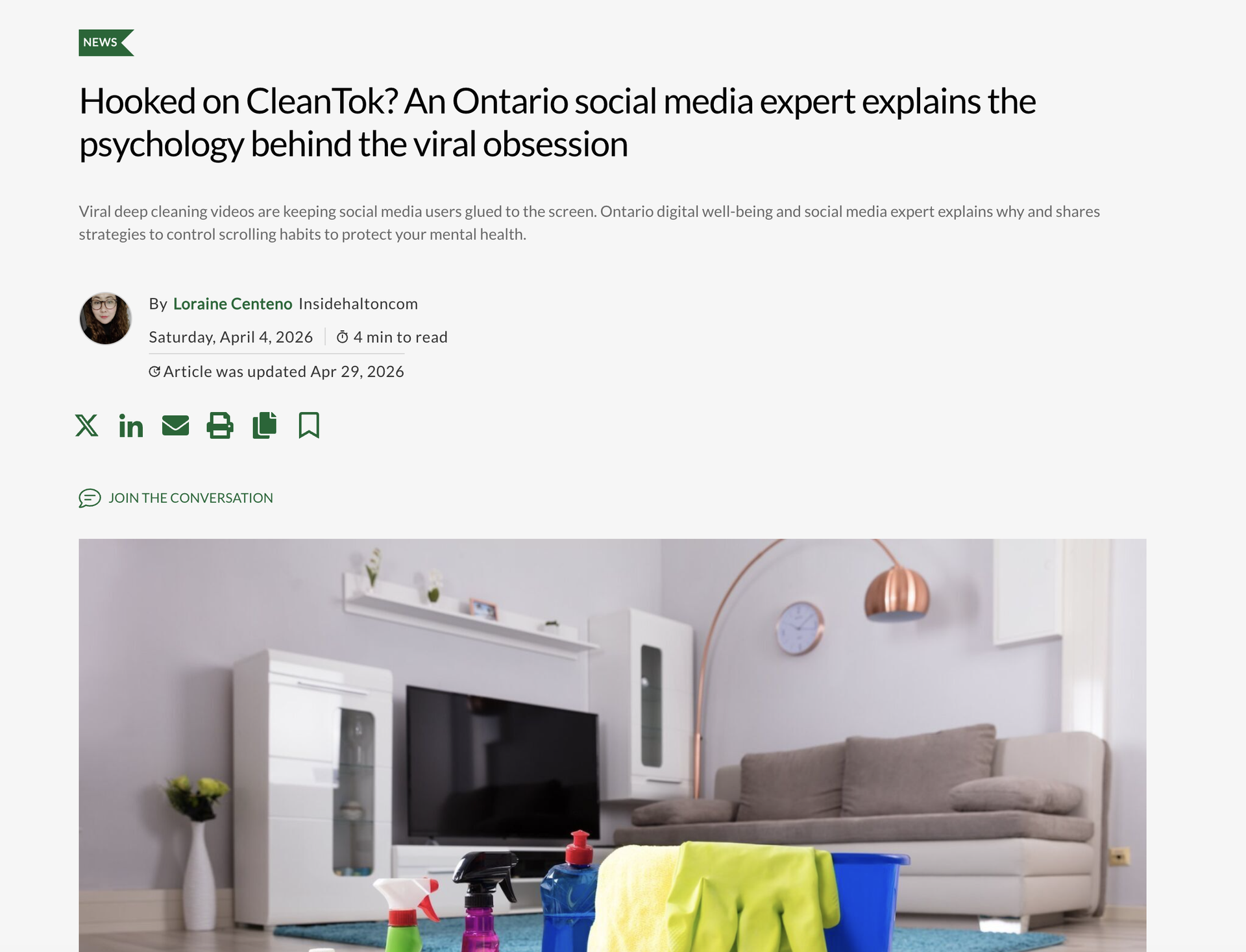
I was recently interviewed for an article exploring why CleanTok videos are so wildly addictive, and honestly, as someone who watches them myself, I had a lot to say.
Here is what is actually happening in your brain. Our minds are wired for pattern completion, so there is a neurological sense of relief when disorder becomes order, especially when we get it vicariously with zero effort required. On top of that, the before-and-after format creates a perfect dopamine-delivery loop: you see chaos, you anticipate resolution, you get it, and the short format means the cycle resets quickly and keeps you watching. That is how you end up in what I call a "scroll blackout," where you lose track of time and cannot remember what you just watched minutes ago.
There is also the Zeigarnik Effect at play. Our minds hold unfinished tasks in low-grade tension, and a messy room registers as an incomplete task. CleanTok scratches that itch for us without us having to lift a finger, which is part of why it feels so satisfying.
So why does this matter for us as people leaders? The same loops that keep us watching strangers scrub stovetops run through our teams all day. The dopamine hits, the unfinished-task tension, the endless scroll. We have built workplaces on the exact mechanics that hijack attention, then wonder why people cannot focus. If social media needs harm reduction, so does always-on work. And leaders hold most of that lever.
Read the full article |
|
|
|
My Leadership Team Can't Get on the Same Page |
A reader writes: "I lead a team of four department heads and we keep leaving meetings thinking we are aligned, but then everyone goes back to their teams and takes the work in different directions. I have tried clearer agendas and written summaries, but it keeps happening. What am I missing?"
First, I want to name something that might sting a little: the problem is that your team is experiencing polite agreement and mistaking it for genuine alignment. I have seen this so many times in my work with organizations.
What happens is that everyone hears the same words but fills in different meanings. "We are going to prioritize customer experience" sounds like agreement until one person thinks it means hiring, another thinks it means redesigning onboarding, and a third thinks it means firing the vendor. Same sentence, completely different plans. Before anyone leaves the room, have each person write down independently what was just decided.
Compare the answers out loud. The gap between what people write will tell you more about your team's alignment than any amount of follow-up emails. If you do this once and the results surprise you, build it into every meeting. Make disagreement cheaper than silence.
If people are nodding to avoid conflict, your meetings are producing consensus theatre. Ask a specific question like "what is the weakest part of this plan?" and wait. Silence is the price of honest input, and you have to be willing to sit in it. The good news is that this is entirely fixable. You clearly care about getting your team moving in the same direction, and that already puts you ahead. Love you! |
|
|
|
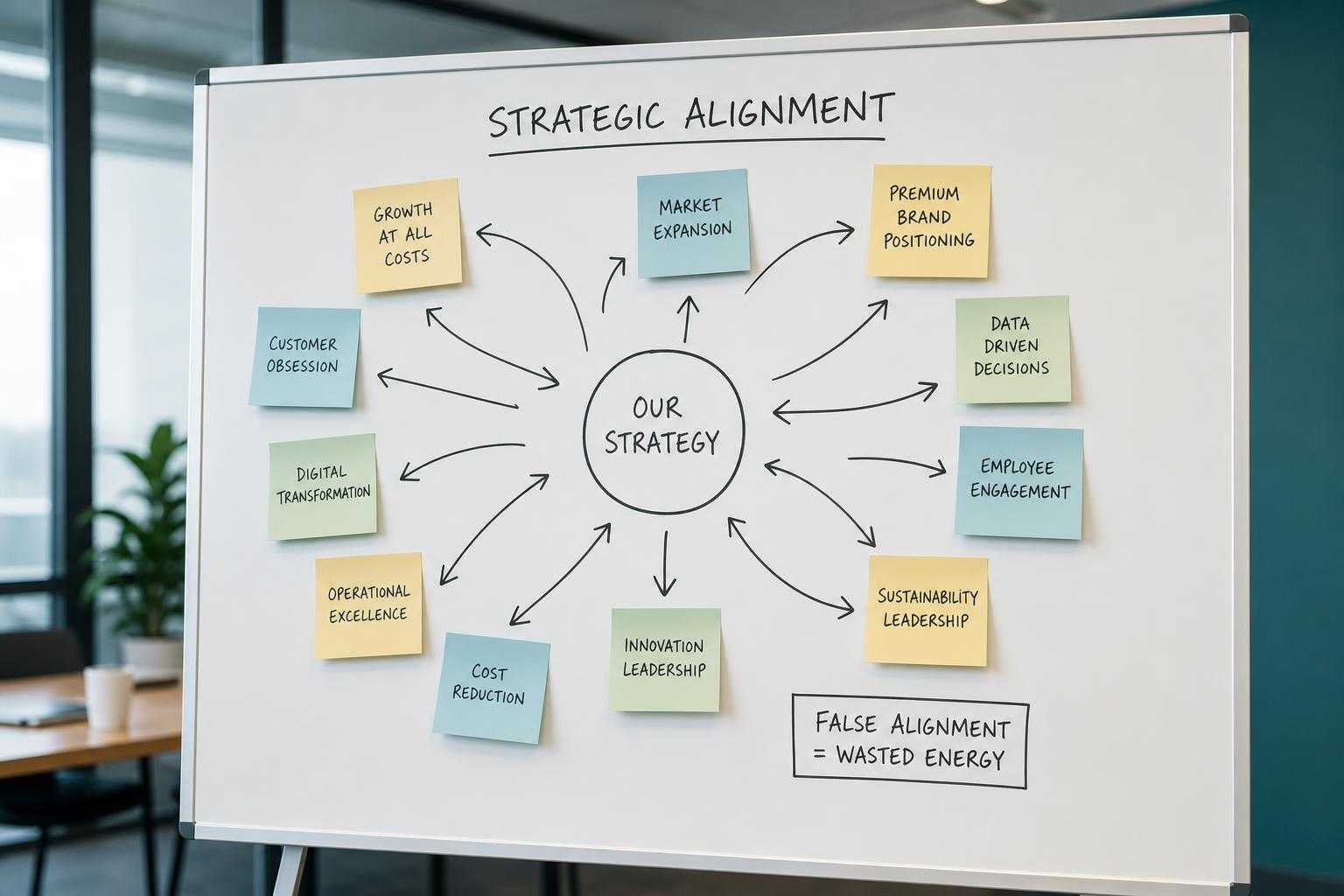
Harvard Business Review just published a piece that made me want to forward it to every leader I know. Researchers from BCG studied why most organisational change efforts fail and landed on a diagnosis I see constantly: false alignment. Leaders leave the room believing they agree on why, what, and how to change. They do not.
The research shows that false alignment grows from vague discussions, avoidance of disagreement, and pressure to move too quickly. The consequences range from paralysis to misdirected activity to watered-down compromises where nobody gets what they actually need. It is a pattern that costs organisations months of wasted work and erodes trust in the process. What stood out to me from the research:
The fix requires specificity and safe dissent.
The authors found that teams who invested time up front to surface genuine disagreement, and who committed to rigorous debate before execution, moved faster in the long run. Alignment is the product of honest conflict that has been worked through. "We are aligned" usually means "we are not in one another's way."
That is a quote from the piece that stopped me cold. As people leaders, we have to hold ourselves to a higher standard than polite coexistence. True alignment means every person in the room can independently articulate the same answer to "what did we just decide?" and mean it. If you have ever left a leadership meeting feeling confident only to watch execution fall apart, this research explains exactly why. It is worth your time.
Read the full HBR article |
|
|
|
Enjoy? Remember to Subscribe |
Subscribe here and The People Practice will land in your own inbox each week. |
|
|
|
Thanks for reading!
Don't want to receive these emails? There's an unsubscribe button at the bottom. |
Copyright Skills Camp 2026 20 Iannuzzi Street, TH9, Toronto, ON, M5V0A2 |
|
|
|
|