Hey, it's Dr. Bailey
Something I keep hearing from us right now is a kind of quiet exhaustion. Not from the work itself, but from the gap between knowing what matters and actually being able to act on it. We know soft skills are critical. We know our people leaders make or break the employee experience. And yet the systems, the budgets, the time, they do not always cooperate.
That gap is exactly what this edition is about. We are not reacting to change here. We are designing through it. As you read, ask yourself: Is our current approach building the capabilities our teams will need a year from now, or just patching the ones we needed last year? Hit reply and tell me what comes up for you. |
In this week's edition: What's Coming Up at SkillsCamp What People Leaders Need to Know About Soft Skills and the Evolving Workforce Navigating a Big Experience Gap The Research Is In: Emotional Intelligence Is How Leadership Actually Lands
|
|
|
|
What's Coming Up at SkillsCamp |
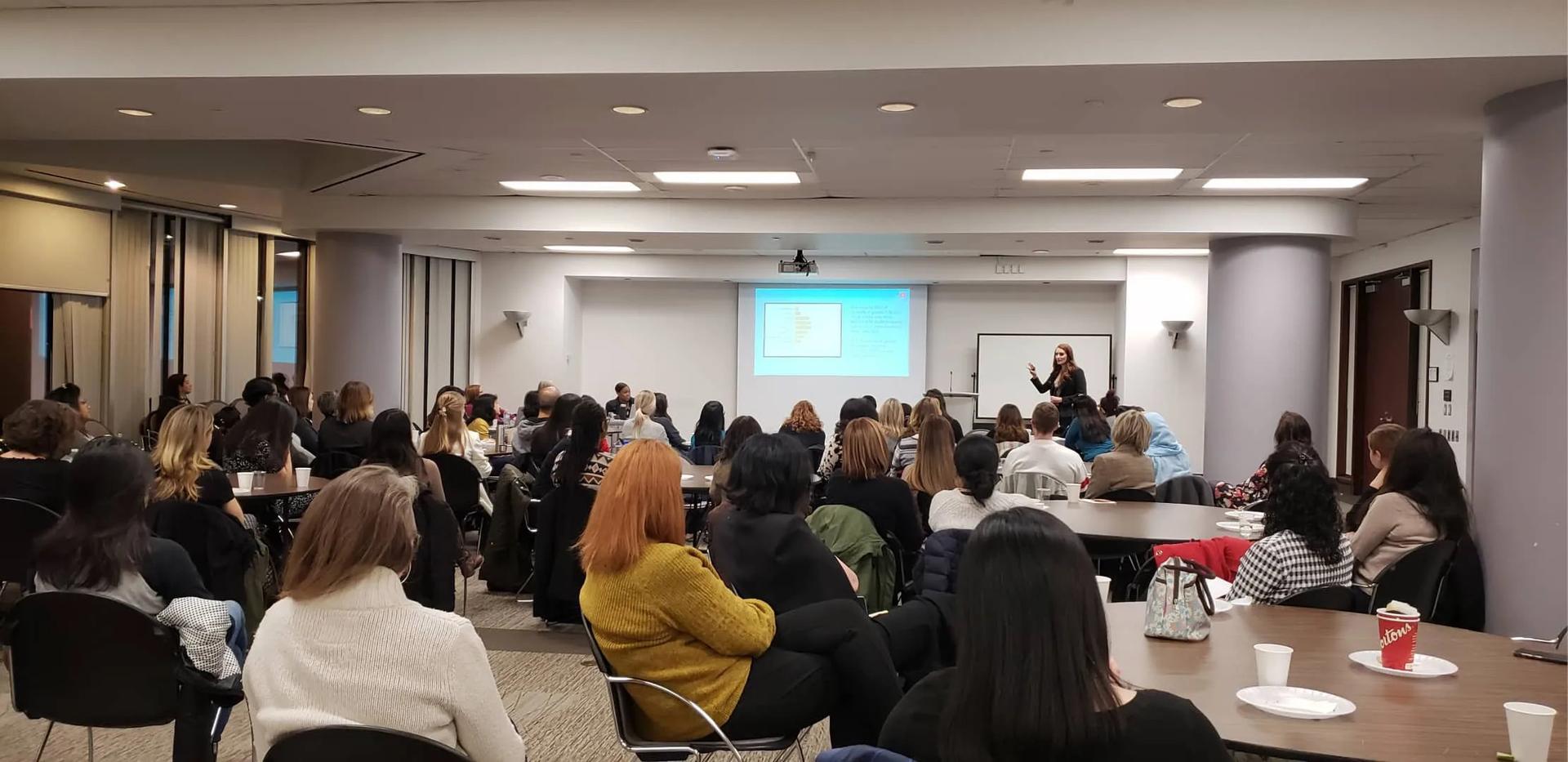
COMING SOON: Leadership Intensive: Designing for Resilience - A half-day workshop for people leaders navigating rapid change. Register your interest
ONGOING: SkillsCamp Learning Studio - Soft skills programming for teams, built to be reinforced in practice and not just checked off in a day. Learn more |
|
|
|
What People Leaders Need to Know About Human Skills, Barriers, and the Evolving Workforce |
Here is the thing I keep coming back to: we keep treating soft skills like a layer of polish on top of the real work, and then wondering why our teams struggle to adapt when things change. They are not polish. They are the structure. Through our work with Futureworx on building a Pan-Canadian Soft Skills Framework, we surfaced something worth naming clearly. The issue is not whether organizations value these skills. Most do. The issue is whether we are building the conditions for people to actually develop them. Four things stood out: 1. Learning agility is the new baseline.
The ability to pick up new skills quickly is no longer a differentiator. It is table stakes. 2. The gaps are not evenly distributed.
Some people have had years of informal coaching. Others have not. Ignoring that in your development design widens existing gaps. 3. We cannot outsource readiness to candidates.
Expecting people to arrive job-ready treats a design problem as a hiring problem. 4. Shared language creates shared progress.
When we cannot agree on what a skill means, we cannot measure it, develop it, or hold anyone accountable for it. Our job as people leaders is to stop hoping talent arrives pre-packaged and start designing organizations that actually develop it. That is the move. Read the full article |
|
|
|
Navigating a Big Experience Gap |
A reader writes: "One thing I'm dealing with currently is stepping into a role where I have a big experience gap. Normally people in my shoes have years and years of experience. You could say I've bitten off more than I can chew. I waffle between really positive days where I scale a new mountain, to days where I feel stagnant and lost, to days where I truly feel behind and ill-equipped to do my job. Any words of advice would be super helpful."
Here is the first thing I want you to hear: you have all the resources you need or the skills to obtain them. Confidence does not come from having done the job before. It comes from trusting yourself to figure it out. High days, lost days, and days when you feel behind are not a sign that something is wrong. That is what growth feels like from the inside. Frm where you are now to where you're going. Acting from the place where you're going gets you there, but it comes with a "messy middle". That's where you might be now.
Name what you actually bring.
You were put in this role for a reason. Write down what you specifically bring that others might not. Keep it somewhere you can return to on the hard days. Stop comparing your inside to other people's outside.
The people with years of experience are not walking around feeling certain. Maybe they have just had more practice hiding it. Maybe they see the skills you bring and think, "Oh wow, is that what my leaders are looking for now? Not me?" You just never know. You have not bitten off more than you can chew. You have taken a bite that requires you to grow. That is the whole point. Love you! |
|
|
|
Research Is In: Emotional Intelligence Is How Leadership Actually Engages People |
Did you know your direct people leader accounts for 70% of the variance in employee engagement. Not salary, company mission, or even colleagues. One person.
But that raises the follow-up question most of us do not ask: Why? What is actually happening in that people leader relationship that moves engagement up or down?
A 2019 study published in Foundations of Management gives us a useful answer. Researchers Milhem, Muda, and Ahmed analyzed 338 employees and found that transformational leadership does not drive engagement on its own. The effect runs through something else entirely: a leader's emotional intelligence. That is the mediator.
The reason great people leaders create engaged teams is not the vision they communicate or the goals they set. It is their ability to recognize, understand, and respond to the emotional reality of their people. That is the mechanism.
This has direct implications for how we develop people leaders. A one-day workshop might not move the needle if it does not build emotional intelligence. And yet only 28% of people leaders are rated as highly skilled at fostering engagement. We have a development gap hiding in plain sight. The good news: emotional intelligence is a skill. It can be taught, practiced, and reinforced.
Read the full study |
|
|
|
Thanks for reading!
Don't want to receive these emails? There's an unsubscribe button at the bottom. |
Copyright Skills Camp 2026 20 Iannuzzi Street, TH9, Toronto, ON, M5V0A2 |
|
|
|
|