The conversation around leadership is evolving, and one theme keeps surfacing: the skills that shape strong teams are deeply human.
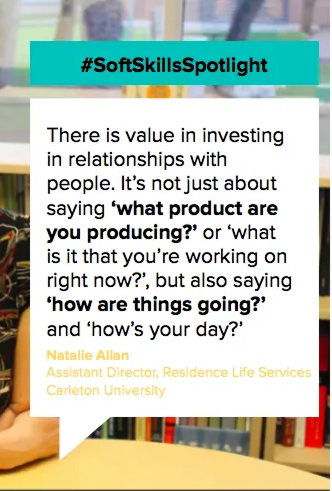
In a #SoftSkillsSpotlight, featuring Natalie Allan, Assistant Director of Residence Life Services at Carleton University, a clear pattern emerged. Leaders navigating complex environments are leaning more into adaptability, connection, and lived experience to guide their decisions.
With a background spanning student conduct, staff development, and wellbeing initiatives, Allan brings a practical perspective on what it takes to lead through uncertainty and constant change.
How are leaders building resilient, high-performing teams in environments that never stand still?
Across her work, one approach stands out: embedding human-centered skills directly into how teams operate day to day.
Prioritizing adaptability:
Change is constant, whether driven by student needs or unexpected disruptions. Flexibility and creative problem-solving are essential for leaders managing evolving environments.
Learning through experience:
Growth happens in real situations, not just structured training. Stepping into unfamiliar roles, navigating ambiguity, and reflecting along the way all contribute to stronger decision-making and resilience.
Strengthening mentorship and community:
Relationships play a central role in development. Both formal mentorship and values-driven connections like empathy and giving back help build trust and long-term capability within teams.
Hiring with long-term growth in mind:
Focusing on qualities like coachability, curiosity, and openness creates teams that can evolve. Technical skills can be developed, but mindset shapes how people adapt and contribute over time.
Reinforcing culture through action:
Programs like “Play It Forward” and community volunteering demonstrate how small, consistent actions can shape team culture and create a sense of belonging.
These approaches reflect what many leaders are asking for today: stronger coaching capabilities, better adaptability, and the ability to lead through complexity without losing sight of people.
The takeaway is clear. Teams perform better when leaders invest in the human side of work, how people grow, connect, and navigate change together.
For leaders, the next step is simple:
Take a closer look at how your team builds these skills in practice. The environments that prioritize them are the ones that stay resilient over time.
Read the full article