Hey, it's Dr. Bailey
Leading humans inherently comes with tensions and polarities. There’s optimism about what’s possible, and also real fatigue from constant change. We want excellent performance from people, and also want to balance care for them.
What matters most is how we express our leadership day to day. Teams that navigate this well tend to anchor on fundamentals like setting clear expectations, showing up with consistent support, and using technology in ways that help sort the noise.
One idea stands out. Strong leadership today is about creating the conditions for teams to stay focused, adaptable, and genuinely engaged. As you read this issue, consider where your current approach is creating clarity and where it might be adding friction. Hit reply and tell us where things feel most stuck right now. |
|
|
How Human-Centered Leadership Anchors Culture and Capability |
The landscape for people leaders today is paradoxical, full of possibility, but laced with exhaustion. In recent conversations with hundreds of HR and L&D leaders, a dual current emerged: hopefulness about the future, but fatigue from relentless change. In our work at SkillsCamp, we see this duality everywhere: teams are eager to thrive, but the volatility of tech transformation, generational shifts, and burnout make steady leadership more urgent than ever. How do we keep our teams healthy and high-performing while the ground keeps moving? The most effective leaders are anchoring their organizations with a ‘bright core’, leading with care, humility, and hope, then translating those values into day-to-day action. This looks like: Normalizing care:
Consistent one-on-ones, protected rest, and clear expectations balanced with empathy. Making AI a co-pilot:
Using technology to lighten cognitive load and free up space for human judgment and connection. Building change readiness:
Practicing resilience through simulations, pre-mortems, and small pilots that boost confidence and adaptability. These approaches align with what leaders say they need most: readiness for change, stronger coaching skills, and sharper strategic thinking. The data is clear, care and humility are the best advice leaders have received, and the outdated myth of ‘never show weakness’ is being left behind.
As one leader shared during a recent Skillscamp session, the most pressing challenge is engagement and wellbeing. Recognizing the humanity in our teams isn’t a ‘soft’ approach; it’s the foundation for navigating uncertainty and building a resilient, high-performing culture. Read the full article |
|
|
Lessons in Embedding Predictive Technology Across Teams for Sustained Impact |
When Reckitt set out to transform its Revenue Growth Management (RGM) approach, the focus shifted toward rethinking how decisions were made across the business. Faced with increasing complexity, leaders recognized that analytics alone wouldn’t drive change without alignment across teams.
The real shift was moving from fragmented, reactive processes to a more connected, insight-led way of operating, one where data, people, and workflows worked together seamlessly. In this transformation, a few key elements stood out: |
-
Embedding AI into everyday workflows: Rather than sitting on top as a separate layer, analytics became part of how teams plan and execute, making data-driven decisions standard practice.
- Building capability through application: Teams weren’t just trained on tools, they used them in real scenarios, integrating new ways of working directly into their day-to-day responsibilities.
-
Creating alignment through shared data: A unified platform allowed teams across functions and regions to operate from the same insights, reducing friction and improving collaboration.
- Connecting technology with process and culture: Transformation extended beyond systems, ensuring that people, workflows, and operating models evolved together.
|
The impact was measurable, stronger performance, improved collaboration, and more consistent decision-making. More importantly, it showed that lasting transformation comes from how teams work together, not just the tools they use. Read the full article |
|
|
Balancing Technology and Human Judgment to Build Stronger Teams |
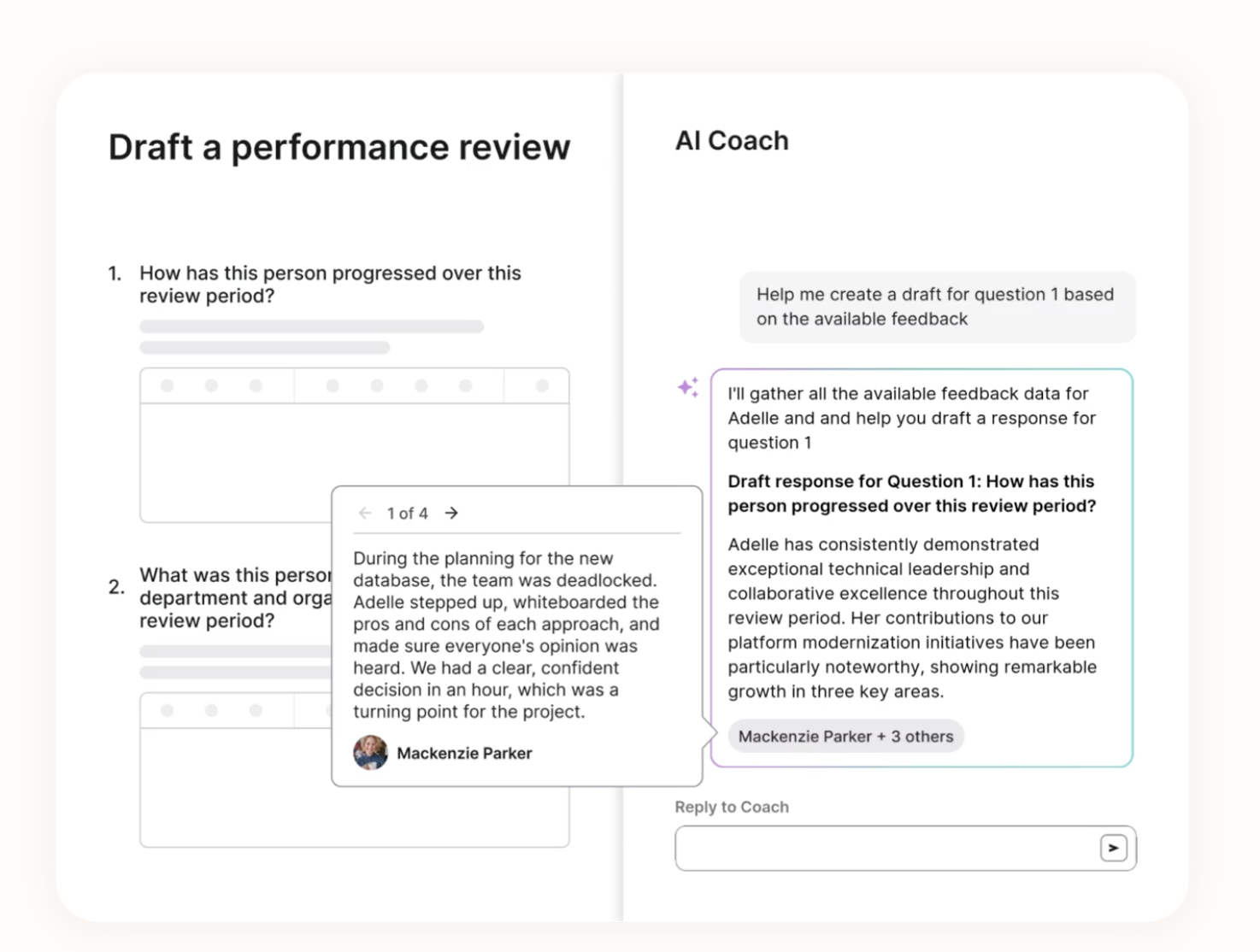
Performance reviews remain central to accountability and growth, but many teams experience them as time-intensive and inconsistent. As AI becomes more embedded in HR workflows, the opportunity is shifting from automating tasks to improving the quality of performance conversations. The real value lies in reducing administrative friction so managers can focus on clarity, coaching, and development.
Where AI is starting to make a difference: |
- Improving consistency in feedback:
AI can identify biased or unclear language and suggest more balanced, objective phrasing, helping standardize how performance is communicated. - Reducing time spent on preparation:
By synthesizing feedback, goals, and recognition, AI enables managers to spend less time compiling inputs and more time engaging with their teams. - Making feedback more actionable:
Structured outputs help turn scattered observations into clear, evidence-based insights that employees can actually act on. - Supporting high-stakes conversations:
AI tools can provide prompts, simulations, and real-time guidance, helping managers approach difficult discussions with more confidence.
|
At the same time, implementation matters. AI should enhance decision-making, not replace it, ensuring performance management remains grounded in human judgment and trust.
Read the full article |
|
|
Thanks for reading! Don't want to receive these emails? There's an unsubscribe button at the bottom. |
Copyright Skills Camp 2026 20 Iannuzzi Street, TH9, Toronto, ON, M5V0A2 |
|
|
|